
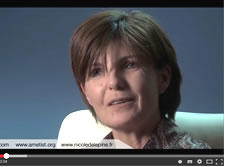
Témoignage Intégral de Carine Curtet
Présidente de l'Association AMETIST
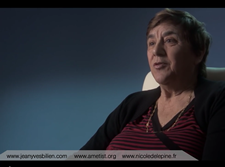 Témoignage Intégral du Dr Delépine
Pour le film Cancer Business Mortel

Si vous souhaitez contacter Nicole Delepine
Rendez-vous sur son site :
|
|
 |
 |
Long term results of composite prosthesis-allograft in tumor surgery.
The adverse effects of radiotherapy and chemotherapy
G. DELEPINE, Ph. HERNIGOU
Réunion anniversaire de la banque d’os de Marseille 23/24 Octobre 2008
In Creteil we implanted our first massive composite prosthesis allograft (MCP) in 1984.
We hoped that MCP could permit a better muscle anchorage and that restoration of bone
stock would decrease the loosening risk of prosthesis.
• The aims of this study is to verify if these advantages are clinically relevant.
• And to precise the effect of adjuvant therapies on late results in order to discuss the optimal
indications of this materia
The allografts
• All allografts of this study were provided by the bone bank of Creteil :
• Sterile harvesting,
• Cryopreservation by -40°
• Irradiation before implantation 25 Kgray)
• Selection of graft on plain X rays without immunologic matching.
• 3 months quarentaine before implantation.
Technique
Prothesis first cemented into the allograft
Then composite prosthesis cimented into the bone
78 patients
Locations were
proximal femur (20),
distal femur (34),
proximal tibia (19)
upper humerus (5).
Median follow up of 19 years (12 to 24)
78 patients:
48 males and 30 females median age 17
The tumors were
• osteosarcoma (46),
• Ewing’s (10),
• fibrosarcoma, MFH
(10),
• chondrosarcoma (7).
60 patients received chemotherapy
and 21 chemotherapy and radiotherapy.
Bone healing
Long Term Results
With a median follow up of 19 years (12-24) , all patients have been reoperated for
Lengthening,
• Wear of prosthesis,
• Loosening,
• Resorption of allograft,
• Infection (21) or tumour recurrence (2).
Infection or tumour recurrence.
21 patients suffered of deep infection 7 of them were secondary amputated).
2 other were amputated for tumour (1 local recurrence and 1 post irradiation sarcoma)
Secondary Lengthening
The healing of the graft permit a longer anchorage for the stem of the expanding prosthesis.
Secondary lengthening 8 centimeters
78 composite allograft protheses
Resorption of allograft in 51 patients
51 resorptions
25 minor,
16 severe
10 major
The 21 irradiated patients suffered of
15 non union
18 secondary fractures
8 secondary major resorptions
and 11 deep infections
resulting in 6 amputations
Complications are correlated with adjuvant therapies
Minor RESORPTION
12 years EVOLUTION
Chondrosarcoma. No adj.
17 Years follow up
Chondrosarcoma no adjuvant therapy.
Wear of the acetabulum
20 years evolution
High grade osteosarcoma
• High dose chemotherapy
• CDFS
• No radiotherapy
• Excellent graft evolution
• Excellent fonction
24 Y F U (no adjuvant treatment) 3 exgange of knee
No severe nor major resorption were observed despite 3 exgange of knee prothesis
Wear of prosthesis
Liberation of wear particules sometimes induced a bone resorption near the articulattion or distally around the stem.
Chemotherapy, Resorption,
Fracture of graft, Loosening
High grade OS High dose chemotherapy. Mal union and Resorption of graft induced loosening of prothesis
RADIOTHERAPY:
non union, major resorption, fracture
MAJOR RESORPTION
At last evaluation the function
(EMSOS criteria) is rated:
excellent in 31,
good in 23,
fair in 12,
poor in 12.
Conclusion
MCP permits a better muscle re insertion and gives usually a better function than massive prosthesis.
• This advantage is more evident for upper femur and proximal tibia and humerus especially when a long resection is necessary.
• With long follow up the loosening risk of MCP does not seem different from that of massive metallic prosthese.
MCP permits a better muscle re insertion and gives usually a better function than massive prosthesis but are threatened by non union during chemotherapy and massive osteolysis and fracture after irradiation.
• When radiotherapy can not be avoided, a massive custom made prosthesis should be preferred to MCP.
|  Consulter le document dans sa version complete Consulter le document dans sa version complete |
|
 |
|

 L'ASSOCIATION

